Punjab Begins Wheat Procurement: Promises Payment Within 3 Days
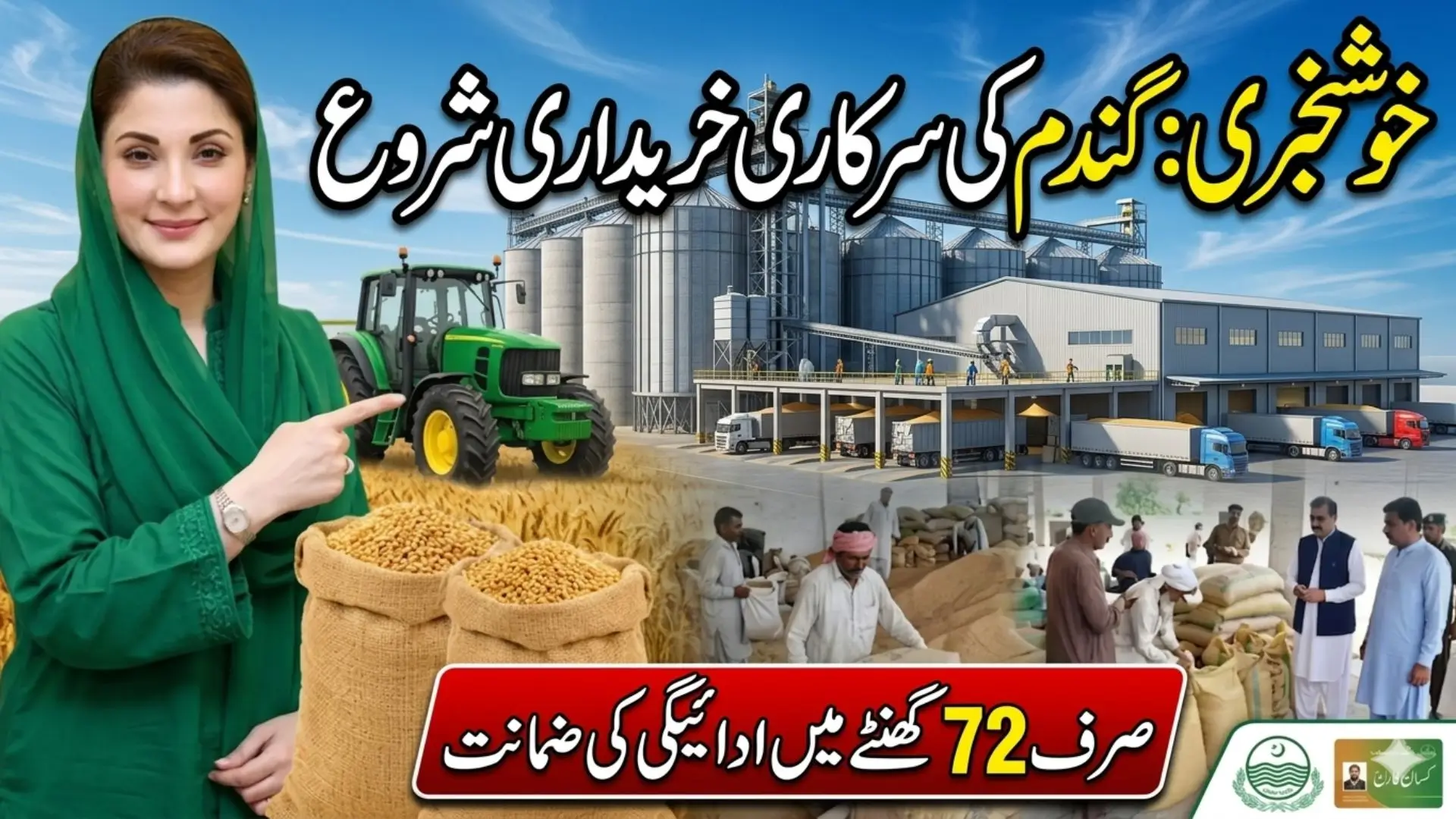
Punjab Begins Wheat Procurement: Promises Payment Within 3 Days. The Government of Punjab has officially launched a massive wheat procurement drive, stepping in to support the provincial agricultural sector during a pivotal harvest season.

In a move designed to shield farmers from market volatility and rising input costs, the administration has introduced a streamlined system focused on transparency and rapid financial turnaround.
This initiative, spearheaded by Chief Minister Maryam Nawaz Sharif, aims to eliminate the traditional “middleman” exploitation that has historically plagued the rural economy. By modernizing the procurement chain, the government is signaling a shift toward a more farmer-centric economic model.

Government Sets Wheat Price at Rs. 3,500
To provide a safety net against fluctuating market rates, the Punjab government has fixed the wheat support price at Rs. 3,500 per 40kg. This rate was determined after evaluating the current costs of fertilizers, diesel, and labor, ensuring that farmers can cover their overheads while maintaining a sustainable profit margin.
Key Benefits of the Fixed Support Price:
- Economic Stability: Protects farmers from selling at “distress prices” due to oversupply.
- Input Cost Recovery: Directly offsets the hike in production expenses.
- Market Regulation: Prevents private buyers from manipulating prices in rural districts.
- Guaranteed Revenue: Provides a predictable income stream for the rural workforce.
72-Hour Payment Guarantee
Perhaps the most significant reform in this year’s policy is the mandatory 72-hour payment rule. Historically, delayed payments have forced farmers into cycles of debt as they struggled to fund the next sowing season. Under the new directive, payments must be cleared within three days of the wheat delivery.

“Delayed payments are no longer an option. Our digital monitoring systems ensure that the sweat of the farmer is rewarded with prompt financial liquidity.” — Government Spokesperson
Why the 72-Hour Rule Matters:
- Eliminates Debt Traps: Reduces the need for high-interest loans for the next crop cycle.
- Digital Transparency: Uses automated systems to track receipts and disbursements.
- Increased Trust: Strengthens the relationship between the agrarian community and state institutions.
Priority for Kisan Card Registered Farmers
The procurement process is heavily integrated with the Kisan Card scheme. Registered farmers will receive priority at procurement centers, ensuring that the benefits of the support price reach genuine landholders rather than speculators.

The government is also aggressively expanding the Kisan Card network to include small-scale farmers who were previously undocumented. This data-driven approach allows for better distribution of subsidies and more accurate agricultural planning.
Kisan Card Program Impact (2026)
| Program Metric | Current Status |
| Total Registered Farmers | 900,000 |
| Total Loans Distributed | Rs. 100 Billion |
| Loan Recovery Rate | 99% |
Monitoring Through Strategic Committees
To prevent corruption and mismanagement at the ground level, Strategic Management Committees have been formed at both provincial and divisional levels. These bodies are tasked with:

- Overseeing the daily operations of procurement centers.
- Providing an immediate grievance redressal mechanism for farmers.
- Ensuring that the “first come, first served” principle is strictly maintained.
Modernizing Agriculture: Green Tractors and Youth Internships
Beyond procurement, the Punjab government is focusing on long-term mechanization and human capital:
The Green Tractor Scheme
Out of a target of 30,000 units, 20,000 tractors have already been delivered to farmers across the province. This shift toward mechanization is vital for improving yield quality and reducing the time-intensive nature of manual harvesting.

Youth in Agriculture
The “Work with Punjab Government” internship program has been launched to bring fresh perspectives into the sector. Agriculture graduates are being placed in the field to gain hands-on experience, bridging the gap between academic theory and the practical challenges of modern farming.